sales5@yodeldrag.com
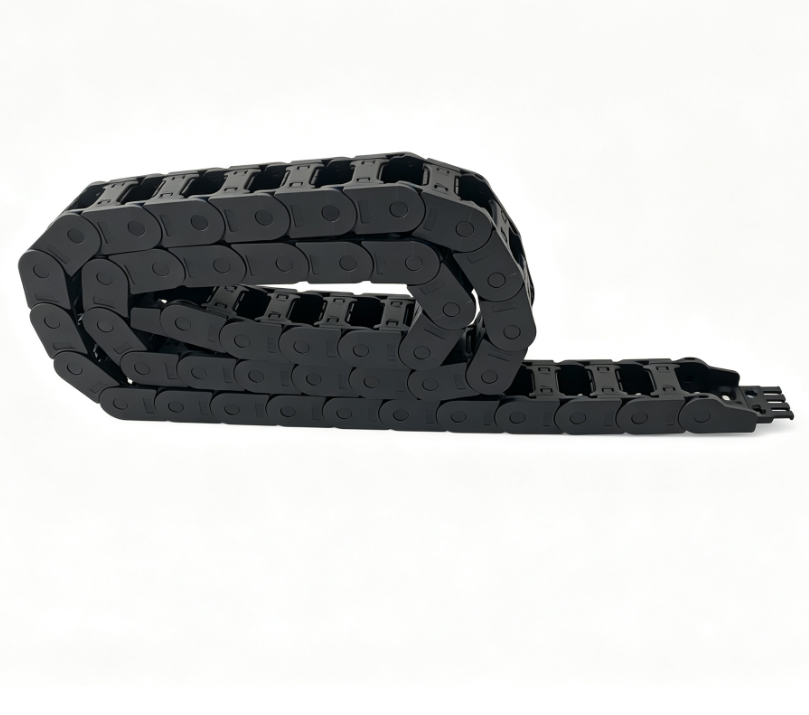
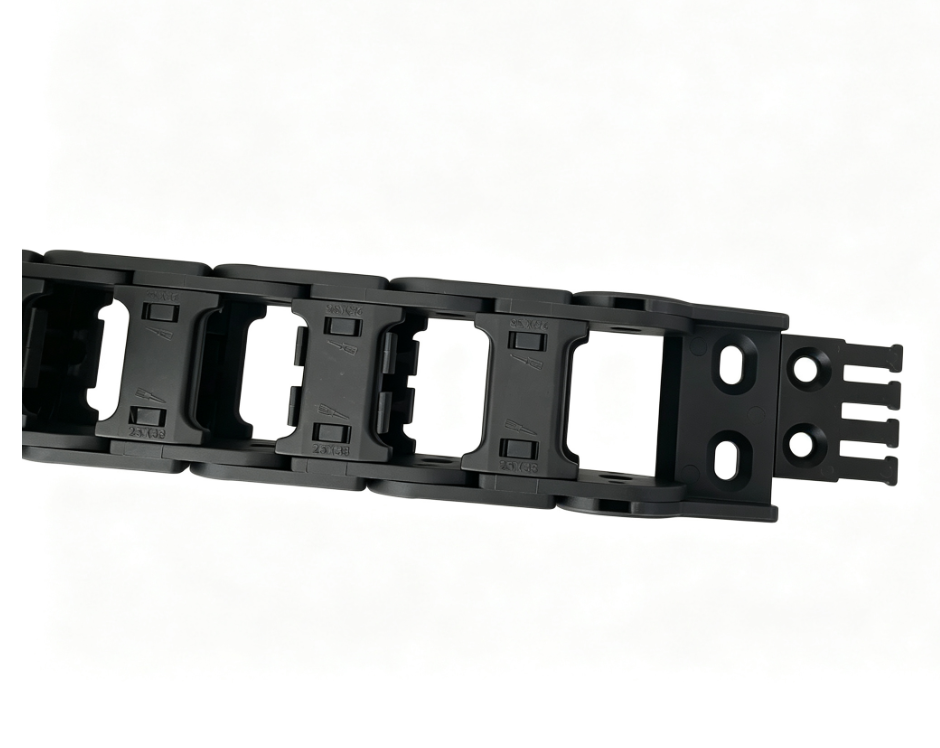
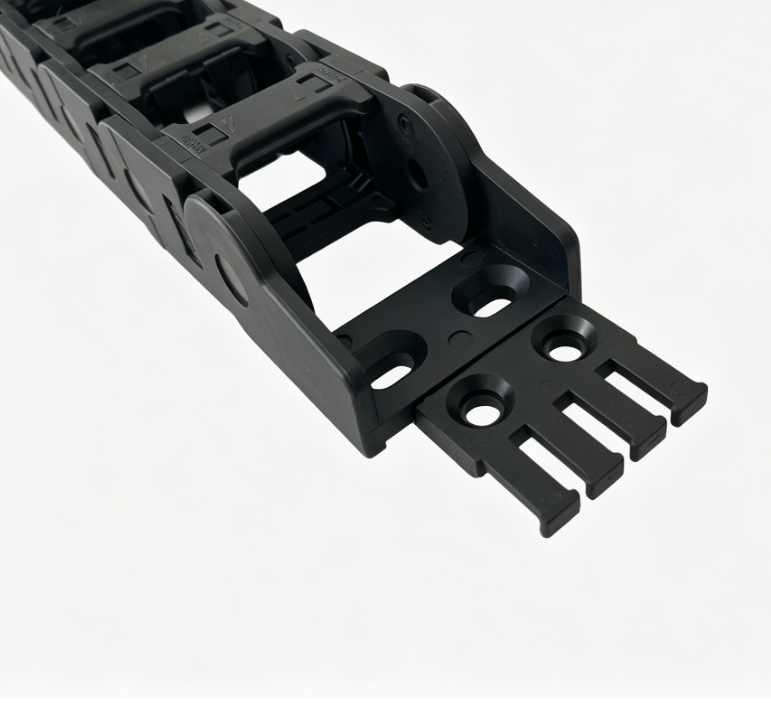
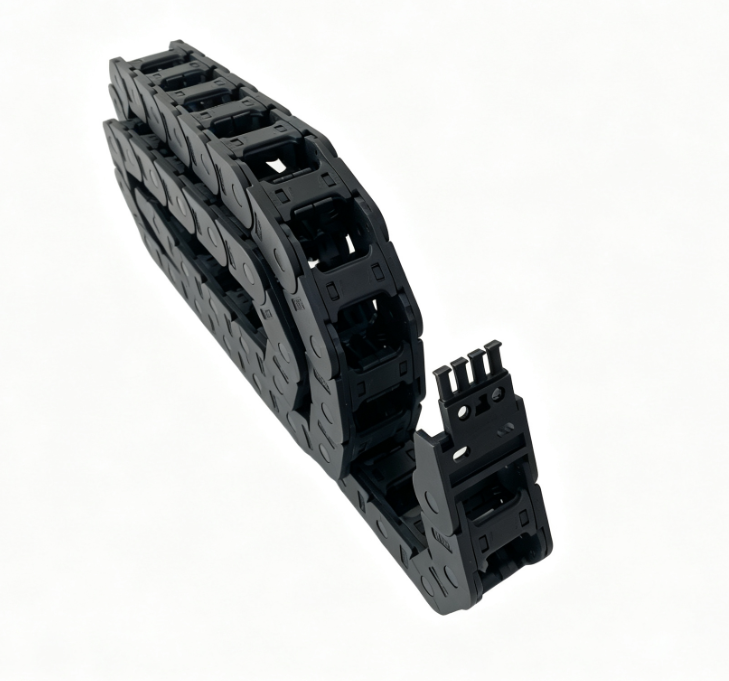
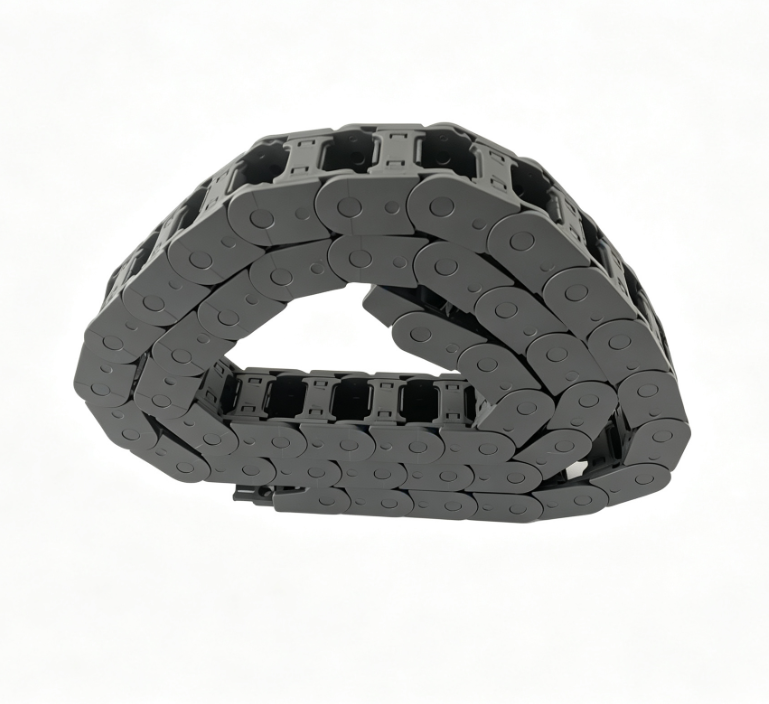
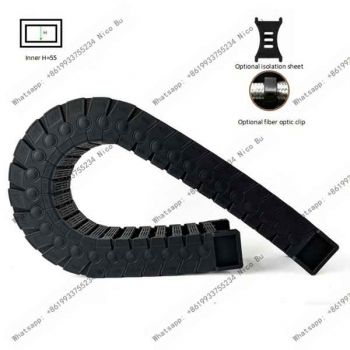
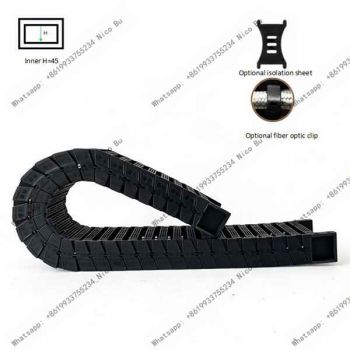
25 Series
|
Type |
Inside Diameter |
Outside Diameter |
Radius or gyration |
A1 |
Bridge type |
Fully type |
Semi-closed |
|
Y25.25 |
25*25 |
40*44 |
55 |
25 |
√ |
√ |
√ |
|
Y25.38 |
25*38 |
40*57 |
38 |
√ |
√ |
√ |
|
|
Y25.50 |
25*50 |
40*69 |
50 |
√ |
√ |
√ |
|
|
Y25.57 |
25*57 |
40*76 |
57 |
√ |
√ |
√ |
|
|
Y25.60 |
25*60 |
40*79 |
60 |
√ |
× |
× |
|
|
Y25.70 |
25*70 |
40*90 |
70 |
√ |
√ |
√ |
|
|
Y25.75 |
25*75 |
40*94 |
75 |
√ |
× |
× |
|
|
Y25.77 |
25*77 |
40*96 |
77 |
√ |
√ |
√ |
|
|
Y25.100 |
25*100 |
40*109 |
100 |
√ |
× |
× |
|
|
Y25.103 |
25*103 |
40*122 |
103 |
√ |
√ |
√ |
|
|
Y25.125 |
25*125 |
40*144 |
125 |
√ |
× |
× |
I. Primary Functions of Cable Combs
Cable Securing and Strain Relief:
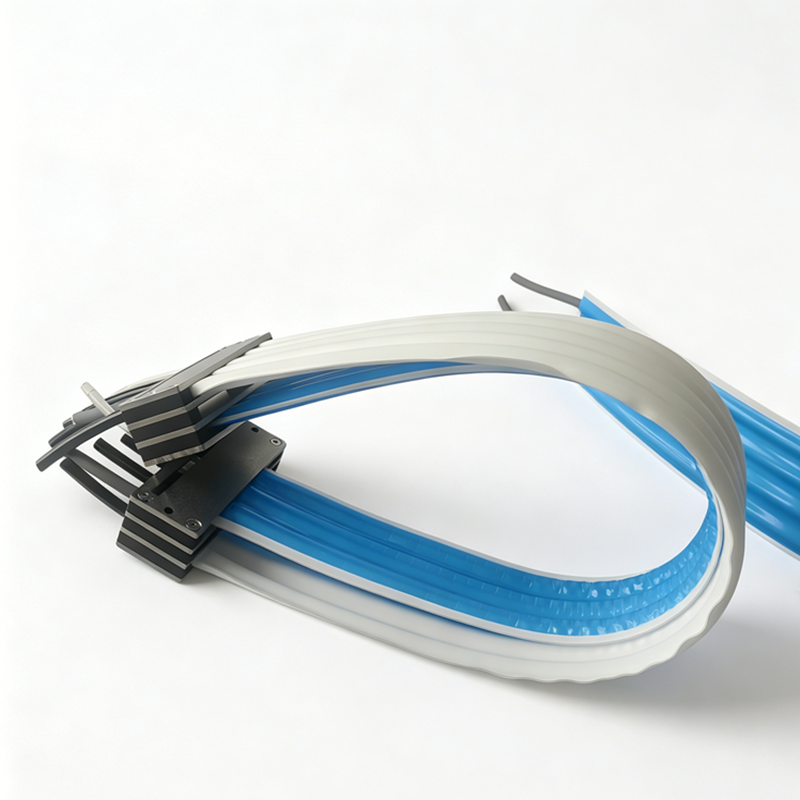
Cable combs typically feature a toothed structure, allowing cables and pneumatic hoses to be securely fastened to the teeth using cable ties.
They transfer pulling forces directly to the comb itself, preventing tension—caused by reciprocating motion, sudden stops, or rapid acceleration—from being transmitted to internal cable connectors or terminals, thereby protecting cables from snapping or coming loose.
Organized Cable Arrangement and Positioning:
They neatly separate and position multiple power cables, signal lines, hydraulic hoses, or pneumatic lines within a confined space, preventing them from tangling, crushing, or rubbing against each other inside the cable carrier.
Wear Prevention and Service Life Extension:
By effectively securing the lines, they prevent erratic swaying, entanglement, or excessive friction against the inner walls of the cable carrier during high-speed machine operation; this reduces wear and significantly extends the service life of the cables.
II. Application Scenarios for Cable Combs
Cable combs are widely used in automation and industrial sectors that employ cable carriers to protect dynamic lines. They are particularly suitable for the following scenarios:
Machinery with High-Frequency Reciprocating Motion: Such as CNC machine tools, industrial robots, and automated production lines. In these systems, frequent acceleration and sudden stops make lines prone to displacement, necessitating the robust securing provided by cable combs.
Complex Systems with Dense Cable Arrangements: When a single cable carrier must accommodate a large number of cables, pneumatic hoses, and hydraulic hoses of varying specifications, cable combs (including stackable multi-layer versions) enable safe, organized strain relief within minimal space.
High-Precision and Cleanroom Equipment: Such as semiconductor manufacturing equipment and precision measuring instruments. These systems are highly sensitive to particulate matter and cable wear; securing cables with combs prevents the generation of dust caused by friction and avoids poor electrical contact resulting from cable movement.
Contact Person: Nico Bu
Whatsapp:+86 19933755234
Mobile Phone:+86 19933755234
E-mail: sales5@yodeldrag.com
Add:Henghua Building 2-1002, Hexi District, Tianjin, China


WeChat Whatsapp